
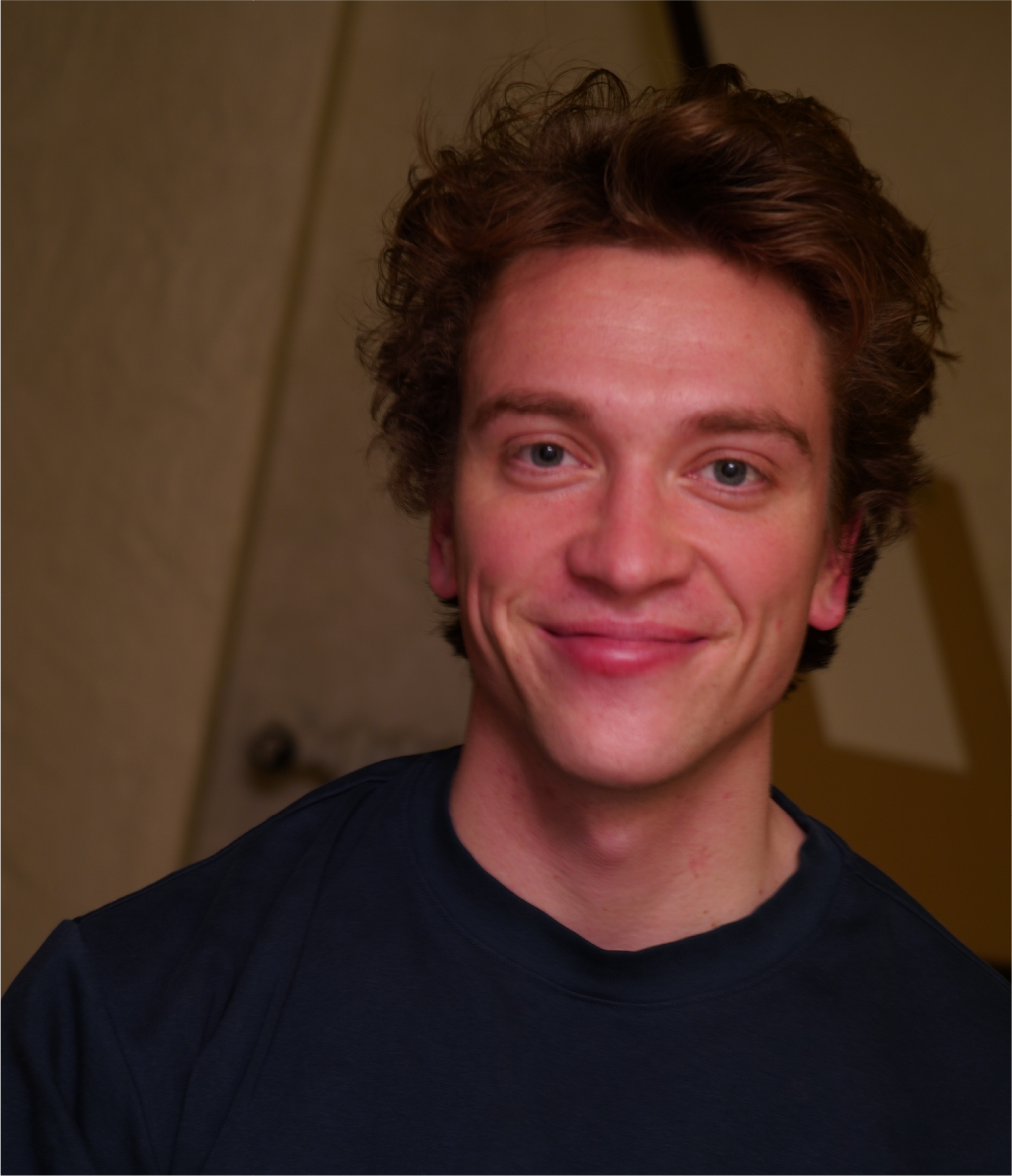
Speaker: Andrew Hoffman, Lamont Doherty Earth Observatory
Title: Beyond ice thickness: Toward spatially-distributed measurements of 3D englacial structure, ice-sheet vertical velocity, and crystal-orientation fabric
Host: Benjamin Keisling
Abstract: Radar technology has transformed our ability to map ice-sheet thickness and subglacial topography. Yet the processes controlling ice-sheet response to climate change (basal sliding and internal deformation) depend on mechanical properties of ice, which are rarely observed.
In this talk, I will describe how new radar technology and survey strategies are moving radio glaciology beyond 2D geometric mapping to distributed measurements of 3D subglacial and englacial structure, ice deformation, and ice crystal-orientation fabric. This requires the application of two new radar technologies: multi-element 3D (swath) imaging and radar polarimetry.
First, I will highlight how swath radar surveys at Hercules Dome, Antarctica reveal U-shaped valleys and mega-scale lineations beneath a region of modern slow ice flow. This subglacial landscape requires past fast flow and informs hypotheses for ice-sheet nucleation from this region. Then, I will describe ice-flow theory that motivates the potential for repeat-pass (or multipass) radar interferometry, showing how depth-resolved phase changes of internal reflectors can be converted to englacial strain rates using repeat-pass radar data collected near the Summit of the Greenland Ice Sheet and Camp Century. Finally, I will discuss quad-polarimetric radar observations collected in both Greenland and Antarctica that demonstrate how measurements of dielectric anisotropy can be used to make profiling measurements of crystal-orientation fabric.
I am also starting a new glacier geophysics group at Rice University. The group will develop phase-coherent and polarimetric radar instrumentation, and build integrated analysis frameworks to deliver model-ready constraints on ice-sheet physics. Prospective graduate students and postdocs interested in joining our group should get in touch.