
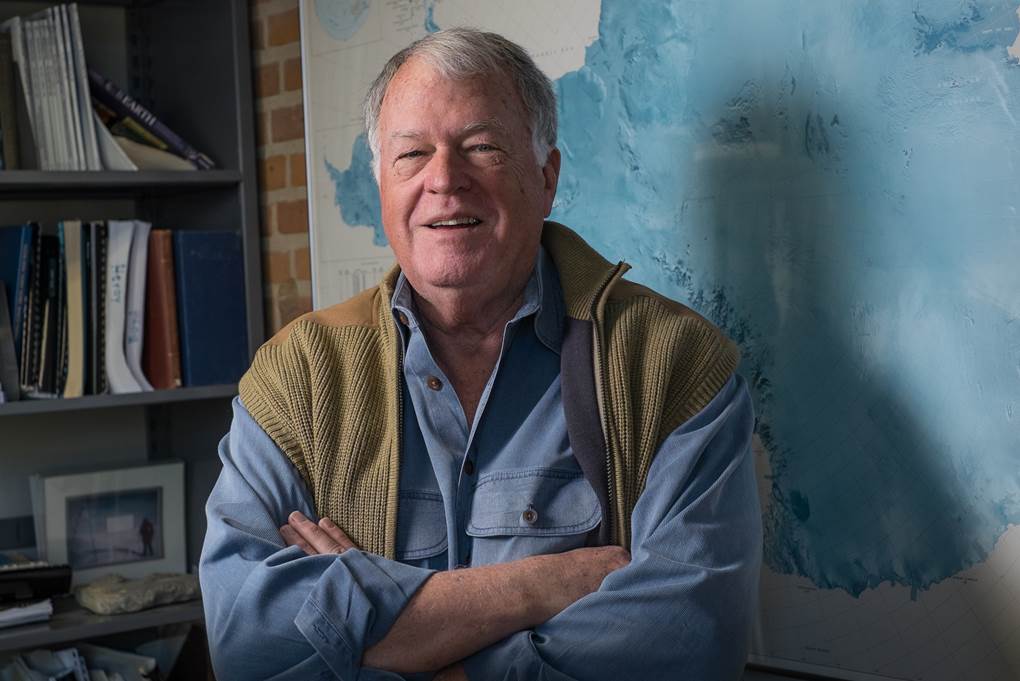
Speaker: John B. Anderson, W. Maurice Ewing Professor Emeritus of Oceanography, Earth, Environmental and Planetary Sciences,
Rice University
Title: Response of the Texas Coast to Accelerated Sea-Level Rise and Climate Change: Lessons Learned from the Holocene
Host: Sara Peters, Mikayla Pascual, Casey Vigilia, Jonathan Markel, Jon Amendola, Owen Seiner, Jonas Haug
Abstract: Acceleration of sea-level rise, coupled with natural and human-induced reductions in sediment supply, has resulted in unprecedented change across the Gulf Coast. Recent projections indicate widespread inundation of existing wetlands by the year 2050, including most of the Mississippi Delta, the Everglades, and the Louisiana Chenier Plain. In addition, barrier islands, peninsulas, and mainland beaches are experiencing rapid erosion. These changes are a stark reversal from the stability and growth of these coastal settings during the last 4000 yr. Indeed, current rates of change are starting to outpace those of the Early Holocene, when sea level was rising at about the same rate as today, but sediment supply to the coast was not impeded by the alteration of sediment supply and dispersal systems. Although direct human influence is a factor in these changes, these impacts are more localized. Coastal change is expected to increase over the next several decades as the rate of sea-level rise increases. The Texas coast is especially vulnerable to these changes because sediment supply to the coast is decreasing and there is a shortage of readily available sand for nourishment.