
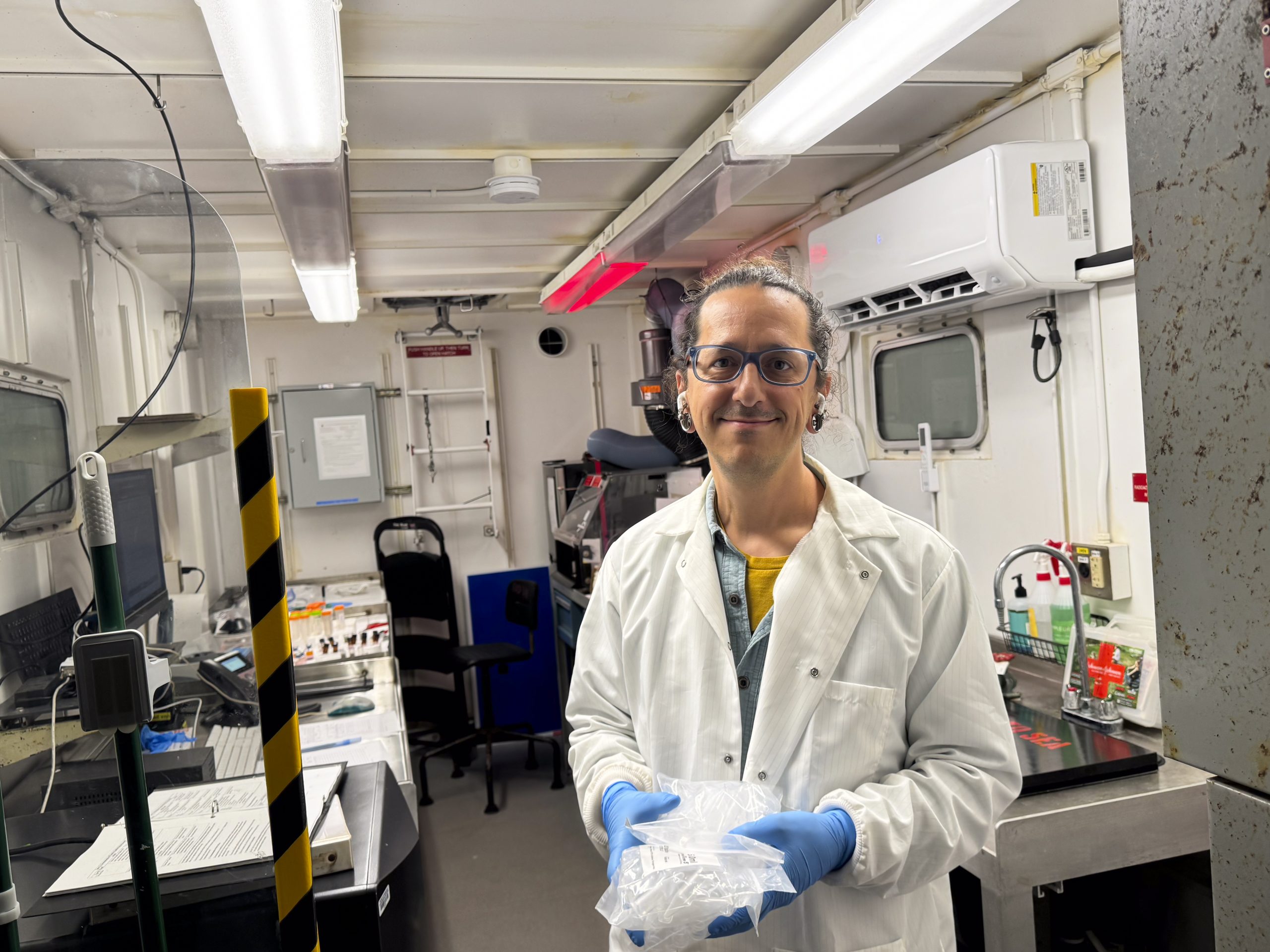
Speaker: Jason Sylvan, Department of Oceanography, Texas A&M University, professor
Title: Very much alive ecosystems on dead hydrothermal vent deposits
Host: Chris Lowery and Elizabeth Spiers
Abstract: Active hydrothermal vent systems are a vital component of the ocean system, balancing elemental budgets, exchanging heat with the Earth’s interior, and hosting unique biological communities. While decades of study have produced robust descriptions of microbial and animal communities on and within actively venting deposits, interest in the study of their inactive counterparts is more recent. Inactive hydrothermal deposits are a potential target for deep sea mining of precious minerals, therefore it is more important than ever to document and study them to understand what ecosystem services they provide and what potentially unique biology they host to help inform conservation and management practices should mining occur. Prior and ongoing work by myself and other researchers has shown that there is a succession of microorganisms on hydrothermal deposits after vents become inactive, resulting in a microbial community with different functional potential than on actively venting deposits. This is important because it indicates that inactive vent microbial communities comprise a unique ecosystem from those on active vents or other deep sea habitats. While the identity of microorganisms on inactive vent deposits is now understood in a broad sense, rates of processes and the presence and/or identity of animal communities are still largely unconstrained.
In this seminar, I will provide an introduction to inactive hydrothermal vent deposits as an ecosystem, including what microorganisms are present, and present recent developments from my lab and collaborators on their microbial ecology, the ecosystem services they are known to provide, and what little is known about animal communities on these features.