
For Team Daedalus, what began as a Texas Space Grant Consortium (TSGC) Design Challenge project grew into a $10,000 award-winning concept recognized at the NASA ORBIT (Opportunities for Research and Brainstorming Innovative Technologies) competition. Their innovative lunar drone design, which uses charged lunar soil as a propulsion source in the Moon’s near-vacuum environment, earned top honors in its category while providing an unforgettable learning experience for a group of mostly first- and second-year engineering students.
At the center of their project was a simple but ambitious question: How can a drone fly on the Moon, where there is virtually no atmosphere?
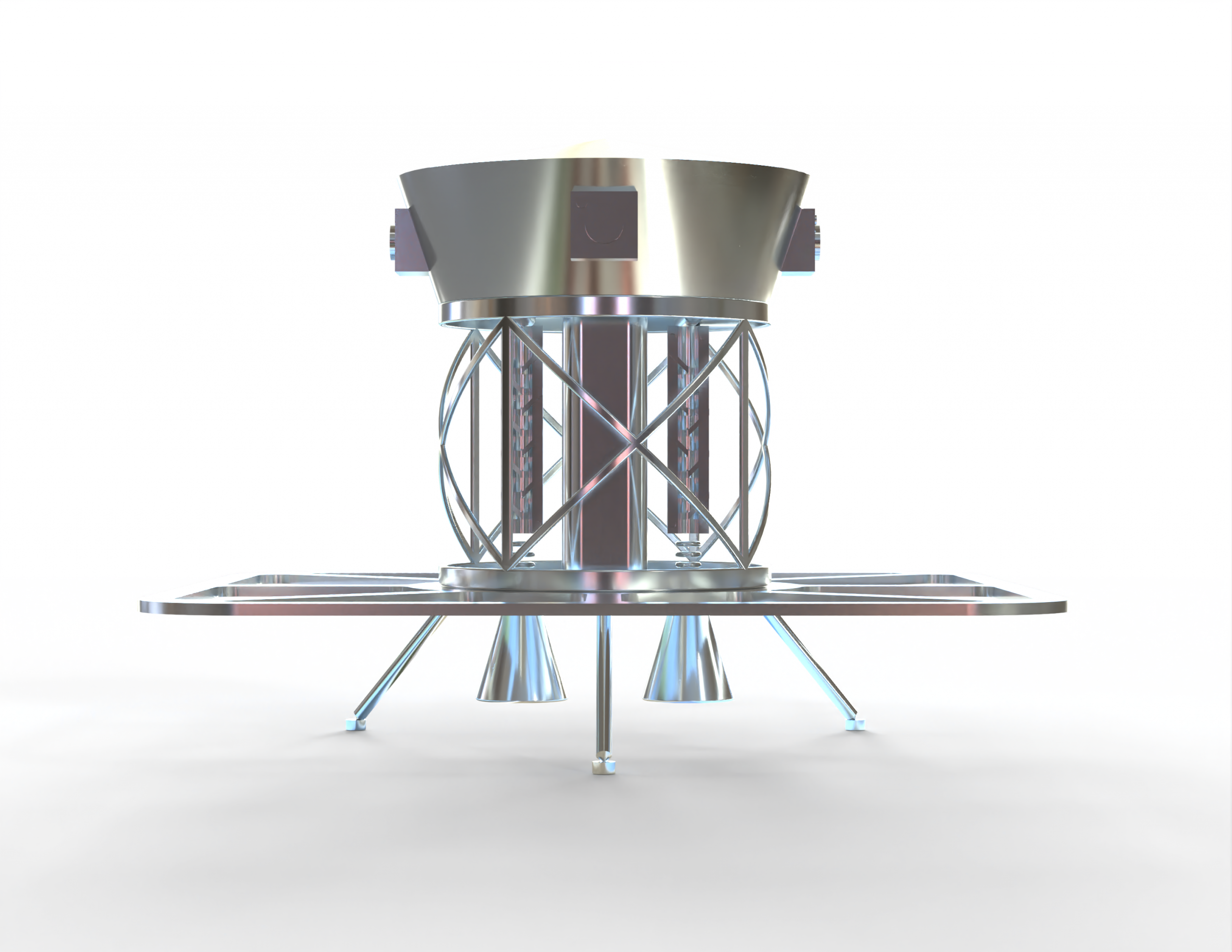
Team Daedalus answered that challenge by designing a drone that uses lunar regolith – the loose soil covering the Moon’s surface – as its source of propulsion. Rather than pushing against air with propellers, the drone electrically charges regolith particles, accelerates them through an electric field, and ejects them at high speed. As the particles are expelled downward, they generate the upward thrust needed for flight.
The team compares the process to static electricity created when a balloon is rubbed against hair. By harnessing that same principle, the drone could one day support inspection, maintenance, surveying, and other operations around future lunar infrastructure.
Daedalus’ path began with Design Challenge, where the team developed not only its technical concept but also the professional skills needed to communicate it effectively.
“Design Challenge was our team’s first opportunity to present our research in a professional setting,” the team shared. “The competition challenged us to refine not only our presentation skills, but also our ability to confidently answer technical questions from industry experts.”
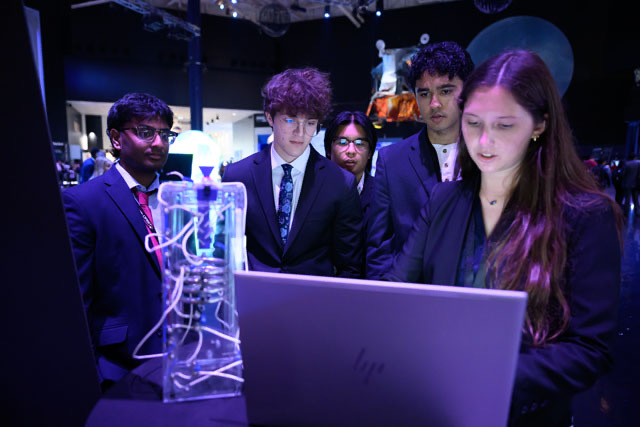
While the technical achievement was impressive, the experience proved equally transformative for the students. The team credits Design Challenge with helping strengthen both its engineering process and project management. Feedback from judges encouraged the students to refine their design before advancing to the national stage, while weekly updates, technical reports, presentations, and poster sessions helped prepare them for the expectations of NASA ORBIT.
“It was definitely intimidating to see the incredible projects and ideas presented by other teams,” the students said. “But we love the saying, ‘If you’re the smartest person in the room, you’re in the wrong room.'”
The project also gave students experience beyond what they typically encounter in the classroom. Instead of focusing on a single stage of the engineering process, Design Challenge and NASA ORBIT challenged the team to take an idea from concept through design, prototyping, testing, and consideration of future implementation.
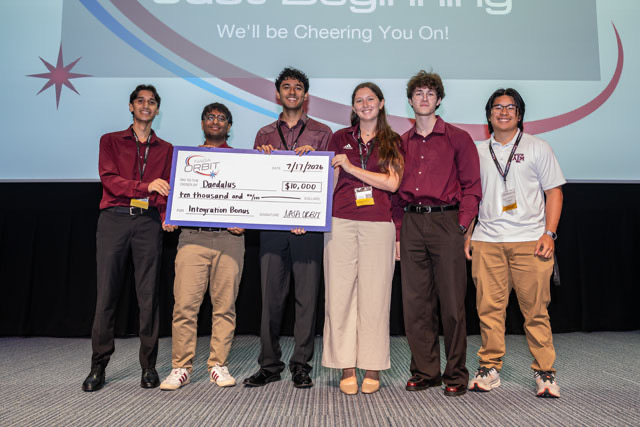
Beyond the awards and recognition, however, the team’s favorite memories came from the journey itself.
“All the little moments along the way with the team were what made this experience so valuable,” they reflected, recalling celebratory meals after major milestones, late-night meetings, inside jokes, and the friendships formed throughout the project.
Those experiences have left a lasting impact on Team Daedalus and shaped how its members view their futures in engineering.
“We are so proud of how we’ve grown as a team and what we’ve been able to accomplish,” the students said. “TSGC’s Design Challenge has given our team amazing opportunities to grow and succeed.”
As Team Daedalus looks ahead, the team hopes its success encourages other students to embrace opportunities like Design Challenge and NASA ORBIT, regardless of where they are in their academic journey. “You never know what you’re capable of until you take that first step.”
NASA ORBIT is a national engineering design competition that challenges collegiate teams to develop innovative technologies to address real-world needs for NASA’s future exploration missions. TSGC’s Design Challenge is a Texas-wide engineering and research competition that pairs students with mentors from NASA’s Johnson Space Center to propose, design, and create solutions for NASA research objectives.