
Design and Launch Your DNA Experiment to Space With Genes in Space
Calling all 7th-12th grade students: have you ever wondered how astronauts might survive a deep-space mission or how we might be bale to use biology to transform new worlds? If so, check out this year’s Genes in Space contest.
Genes in Space is a science contest that challenges students to design original experiments that use biotechnology to explore the real-life challenges and opportunities of space exploration. The contest is free and does not require any additional equipment. The winning experiment is conducted by astronauts aboard the International Space Station!
Submission deadline is April 10th, 2026.
Develop Next-Gen Solutions in New NASA ORBIT Student Challenge
NASA’s Opportunities in Research, Business, Innovation, and Technology (ORBIT) challenge is a multi-phase innovation competition designed to empower university and college students to develop next-generation solutions that benefit life on Earth and deep-space exploration.
Teams can choose from two challenge tracks:
- ORBIT Earth: Transform NASA patents into commercial products that solve terrestrial problems.
- ORBIT Space: Design next-generation systems for NASA’s Moon to Mars missions.
Registration closes February 9th.
Create Sounding Rocket Experiments with RockOn!
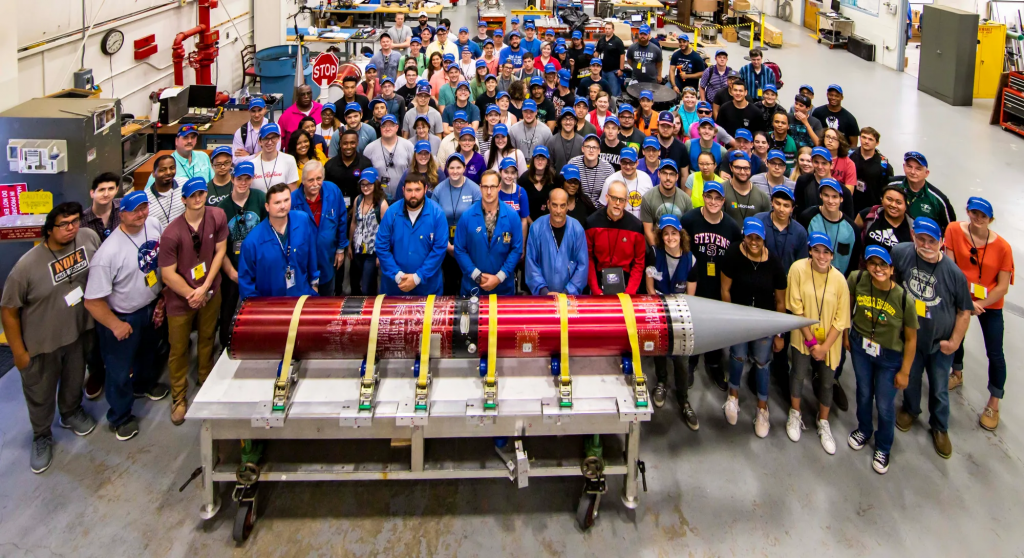
NASA’s Wallops Flight Facility in Virginia is hosting a weeklong, hands-on workshop to teach participants how to create a sounding rocket experiment from scratch and launch it into space. Participants will work in teams of three (two community college/university undergraduate students and one faculty member) to build an experiment that will fly on a sounding rocket to an altitude of more than 70 miles. No prior experience is needed.
Applications are due February 13th.
NASA SEES High School Internship Applications Now Open
The SEES Summer Intern Program is a nationally competitive STEM experience for high school students hosted by the University of Texas Center for Space Research. Interns collaborate with NASA, academic, and industry experts using mission data across disciplines such as aerospace, astronomy, planetary science, remote sensing, microgravity research, and space geodetic techniques. Interns take part in mission-based projects and strengthen teamwork, communication, and professional skills critical to the nation’s future science and engineering workforce.
Applications close on February 22.
Design Challenge Applications Are Live!
NASA Texas Space Grant is happy to announce that the applications for the Spring 2026 Design Challenge program are now open!
For the Spring 2026 program, TSGC will be offering the following topics:
TDC-86 Integrated Camera & Lighting System Optical Optimization
TDC-93 Wireless Mesh Standard Implementation/Evaluation
TDC-101 Laying Power or Fiber Optic Cable on the Moon
TDC-103 Radiation-Tolerant Crew Laptop
TDC-107 Lunar Micro-Nuclear Reactor
TDC-108 Radiation Tolerant Motor Controller
TDC-111 Platform for Lunar Follow-Me Camera Drone
In addition to these Primary Topics from our NASA JSC Mentors, TSGC will be accepting teams for NASA’s newest student challenge – NASA ORBIT. The ORBIT Challenge—short for Opportunities in Research, Business, Innovation, and Technology for the Workforce—is a multi-phase student competition designed to inspire the next generation of innovators, researchers, entrepreneurs, and engineers by having them tackle real NASA challenges and intellectual property. Participants can enter into one of two main pathways: ORBIT Earth where they use NASA patents to develop commercial or nonprofit solutions benefiting Earth or ORBIT Space where they design mission-relevant technologies for NASA’s space exploration efforts.
Applications for the Spring 2026 Design Challenge will close on January 26th. To learn more about the Design Challenge program, please click below.
THIS MONTH IN SPACE
JAN 5, 1972
THE SPACE SHUTTLE BEGINS
President Nixon formally announces the Space Shuttle program, authorizing funding for NASA to develop the first reusable spacecraft.
JAN 17, 1610
GALILEO’S STARS
Galileo first observed three points of light around Jupiter. After observing them for several nights, he found a fourth light and concluded that they were moons. These would become Io, Europa, Ganymede, and Callisto.
JAN 17, 2026
ARTEMIS II ROLLS OUT
The Artemis II Space Launch System and Orion spacecraft are set to roll out from the Vehicle Assembly Building to the Launch Pad to begin pre-launch integration and testing.
JAN 22, 2026
NASA DAY OF REMEMBRANCE
Each January, NASA pauses to honor members of the NASA family who lost their lives while furthering the cause of exploration and discovery, including the crews of Apollo 1 and space shuttles Challenger and Columbia.