


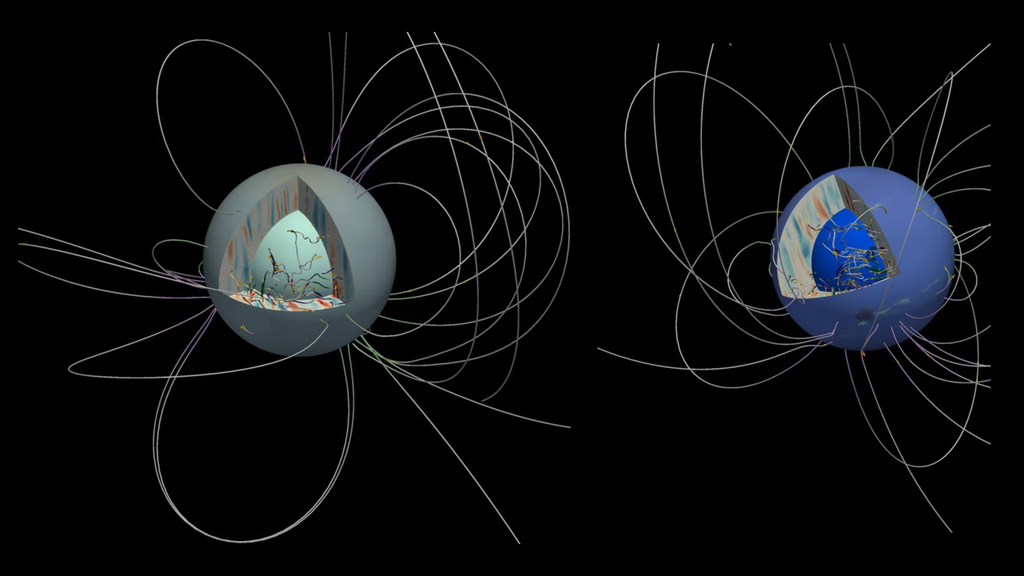
When NASA’s Voyager 2 robotic probe flew by Uranus and Neptune in the 1980s, it uncovered an anomaly: their magnetic fields are highly disordered, unlike Earth, which has well-defined north and south poles. New research suggests that changes in electrical conductivity deep inside Uranus and Neptune may be key for explaining their unusual magnetic fields… Continue Reading Wacky Magnetic Fields of Ice Giants Explained
Faraway tectonic forces may have accelerated the Gulf of California rifting

When the Baja California peninsula broke from mainland Mexico nearly 12 million years ago it gave rise to the Gulf of California. New research suggests that this process of continental rifting was greatly accelerated due to tectonic forces on the opposite side of the Pacific Ocean. The finding comes from a study published in Science,… Continue Reading Faraway tectonic forces may have accelerated the Gulf of California rifting
Where Marine Science Meets Geoscience: Collaborative Workshop Sparks New Research Ideas
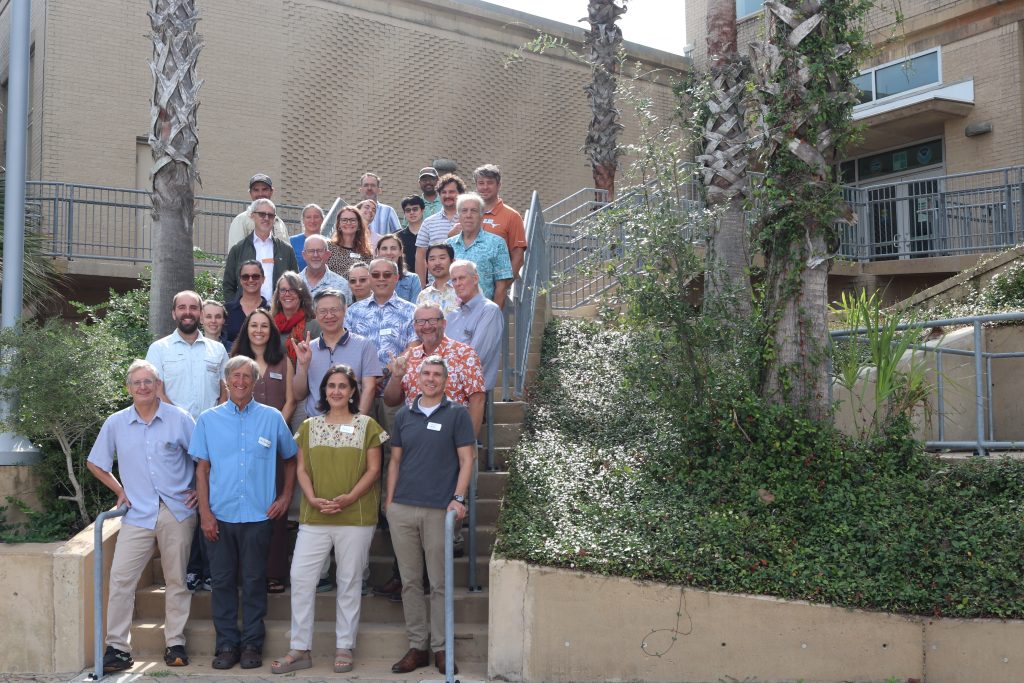
PORT ARANSAS, TX – Researchers from the University of Texas Marine Science Institute (UTMSI), The University of Texas Institute for Geophysics (UTIG), and the UT Jackson School of Geosciences (JSG) gathered in Port Aransas this week for a collaborative research workshop focused on identifying interdisciplinary opportunities that leverage the strengths of all three units. The… Continue Reading Where Marine Science Meets Geoscience: Collaborative Workshop Sparks New Research Ideas
UTIG Researchers Receive Prestigious AGU Awards
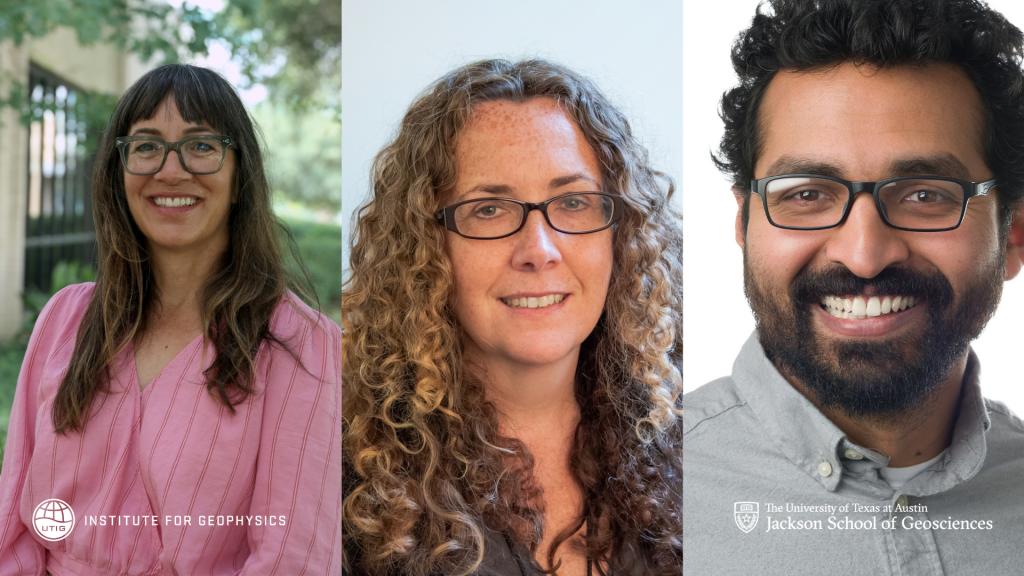
University of Texas Institute for Geophysics (UTIG) Professor Ginny Catania and Research Professor Laura Wallace have been named fellows of the American Geophysical Union (AGU). This is the organization’s highest honor and recognizes scientists who have made exceptional contributions to Earth and space science through a breakthrough, discovery, or innovation in their field. Former UTIG Distinguished… Continue Reading UTIG Researchers Receive Prestigious AGU Awards
The Complicated New Origins of Pangea’s Big Breakup
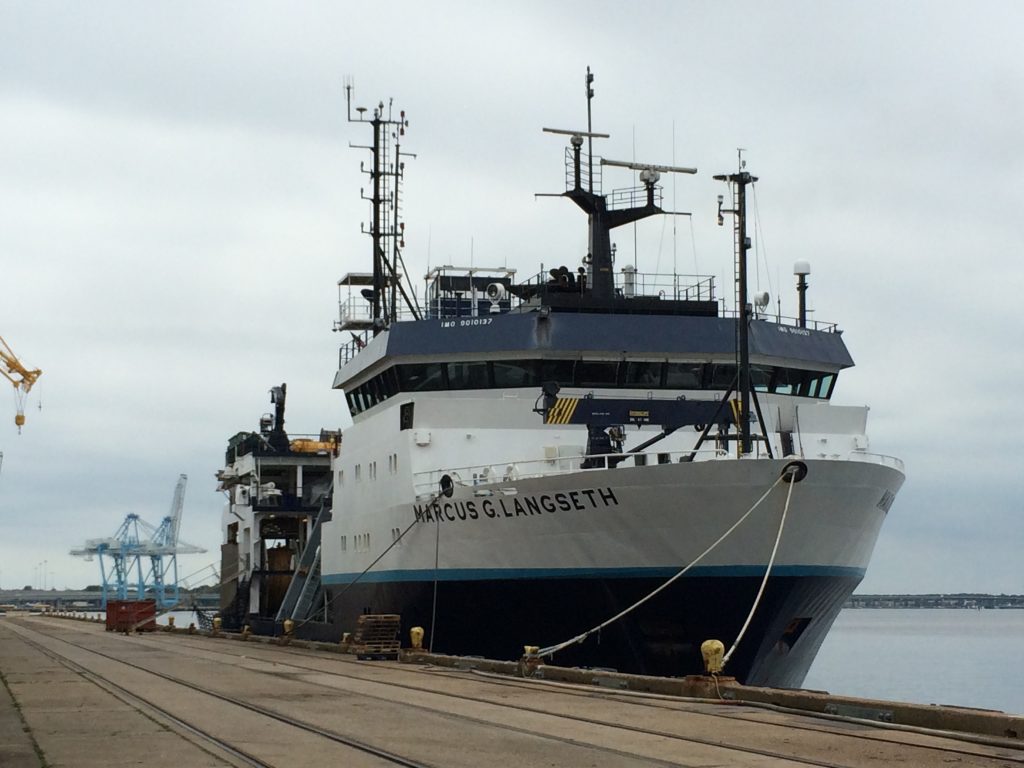
The Triassic Period ended when a gargantuan amount of molten igneous rock called the Central Atlantic Magmatic Province (CAMP) spewed out of the Earth’s mantle and into the Earth’s crust beneath what is now the eastern Appalachian foothills. Millions of years later, the supercontinent Pangea began to rip open, with the east coast of what… Continue Reading The Complicated New Origins of Pangea’s Big Breakup
- 1
- 2
- 3
- …
- 52
- Next Page »